

At Fondazione Pirelli, Students Explore How Brand Heritage Speaks to the Present
by Beniamina Cassetta
What can a historic company teach today’s students about marketing, communication, and brand identity?
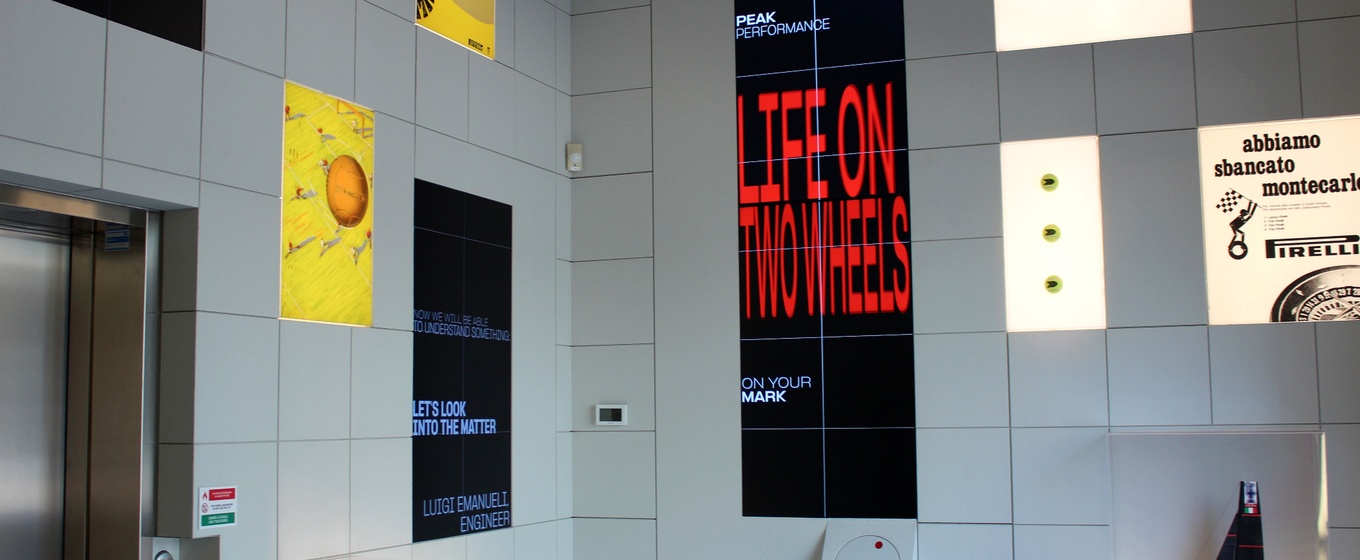
For students in the Digital Marketing Principles course at Università Cattolica, a recent field visit to Fondazione Pirelli offered a compelling answer. Accompanied by Professor Mirko Olivieri, the group stepped into a space where industrial history, visual culture, and corporate storytelling come together, discovering how one of Italy’s most iconic companies has built a brand that continues to evolve without losing sight of its roots.
The experience was an opportunity to reflect on how heritage can be transformed into a living resource for communication. Through historical materials, advertising campaigns, artworks, and documents, students traced Pirelli’s journey from its origins in rubber production to its development as a global brand with a distinctive cultural identity.
Among the stories that captured their attention was Pirelli’s early international expansion. By 1922, when the company marked its fiftieth anniversary, it had already established itself as a multinational business, opening its first factory overseas in Argentina. Innovation, students learned, had been central to that growth from the outset. From the creation of a scientific library dedicated to the study of rubber to the development of products used in both industry and everyday life, including raincoats, overshoes, hot water bottles, and tyres, Pirelli’s history revealed a company constantly responding to change while shaping modern habits and needs.
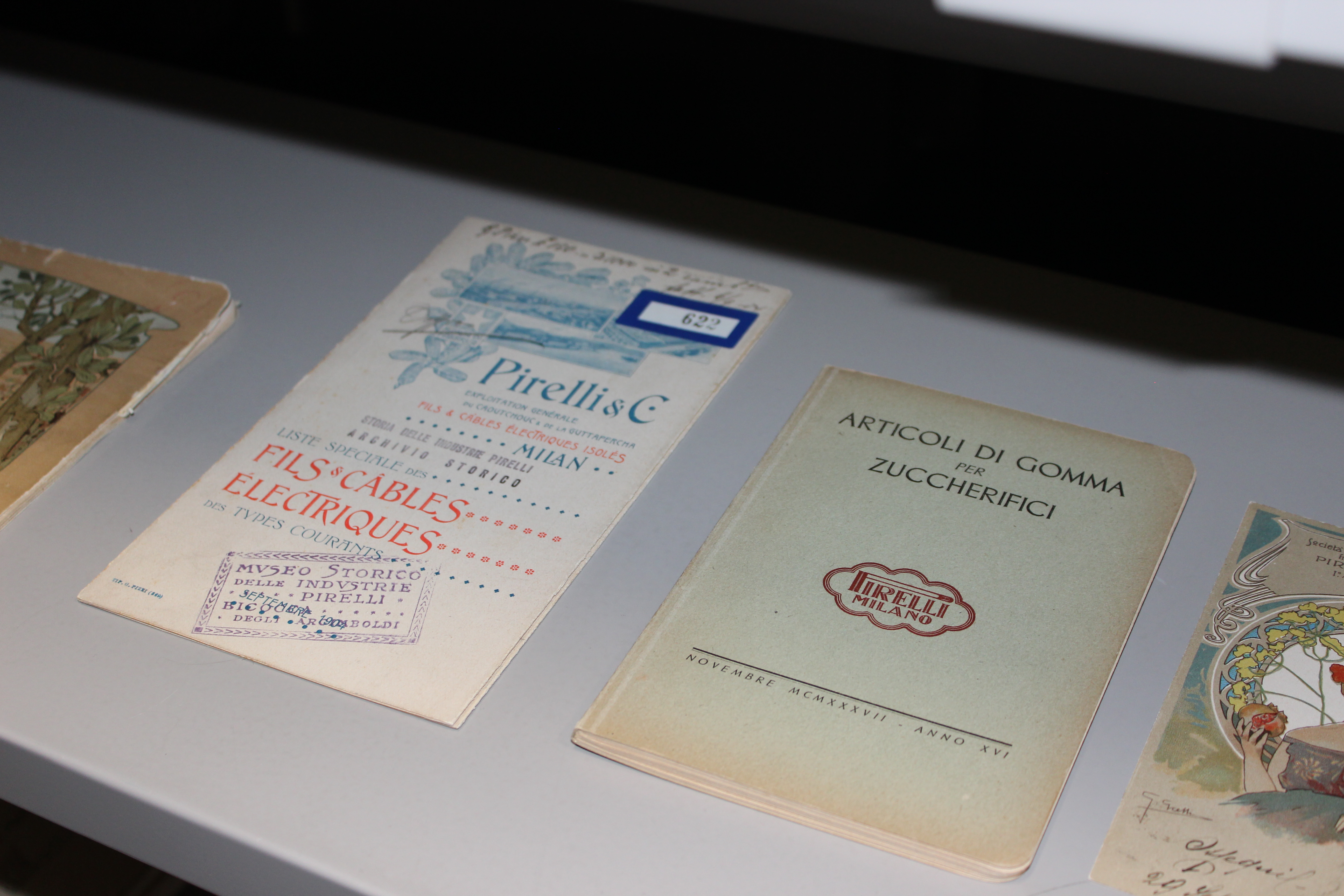
Pirelli library: a French leaflet on electric wires (left) and an Italian booklet on rubber articles for sugar factories (right).
One of the most striking moments of the visit came through an object preserved at the Fondazione: a tyre connected to the historic Peking to Paris automobile race of 1907. The race, which covered more than 16,000 kilometres, was one of the earliest great endurance challenges in motoring history. Although forty crews had originally registered, only five teams set off from Beijing on 10 June 1907. The winning vehicle was an Itala fitted with Pirelli tyres, driven by Prince Scipione Borghese with chauffeur Ettore Guizzardi, and accompanied by journalist Luigi Barzini. They arrived in Paris on 10 August, twenty days ahead of the second-placed team. Careful preparation played a decisive role, including the use of front and rear tyres of the same size so they could be changed more efficiently along the route. For students, this detail brought to life an early chapter in Pirelli’s story, showing how technical performance, strategic thinking, and narrative power were already contributing to the construction of brand value.
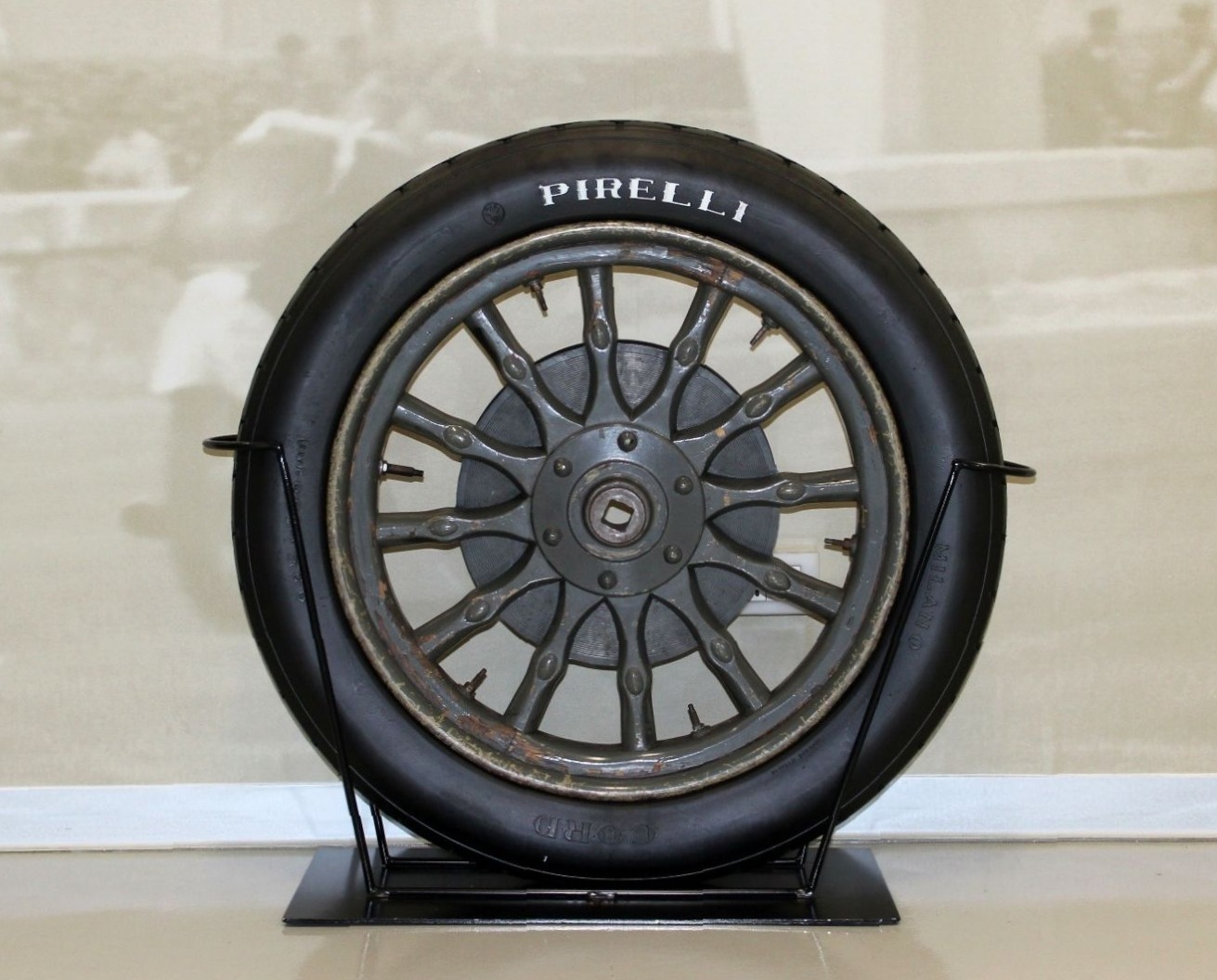
Original Pirelli tyre from the 1907 Peking–Paris race: the rubber has been replaced, but the structure is original.
The visit also highlighted the role of visual language in shaping brand perception. Historical campaigns showed how Pirelli’s communication extended far beyond product promotion, helping create symbols, meanings, and a recognisable aesthetic identity. Students encountered the work of figures such as Giorgio Muggiani, Bob Noorda, and Armando Testa, each of whom contributed to turning technical innovation into memorable communication. In this sense, the visit offered a concrete lesson in how design and storytelling can make even highly functional products part of a wider cultural imagination.
Another important thread running through the visit was the relationship between science and the humanities. A particularly powerful example was the monumental work commissioned to Renato Guttuso in 1961, in which scientific research was represented as a restless human search for truth. For the students, this connection between technological progress and cultural expression opened up a broader reflection on the social role of companies and on the values that institutions can communicate through the way they preserve and present their history.
The visit also offered international students a valuable lens through which to understand Milan. Pirelli’s story is closely intertwined with the city’s industrial development and urban transformation, including the regeneration of former industrial areas into spaces for services, culture, and education.
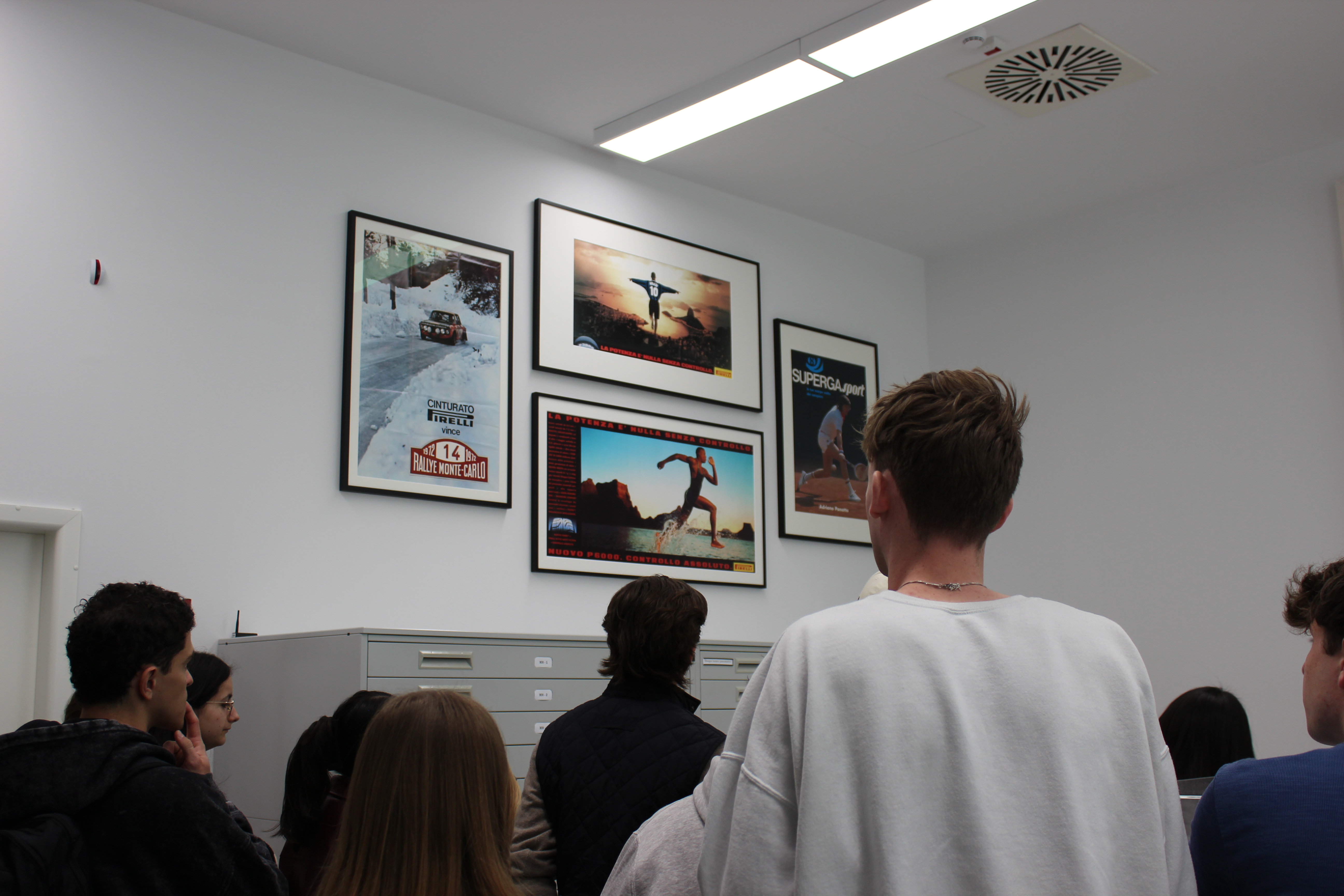
Students observing historic Pirelli advertisements on display in the archive.
Professor Mirko Olivieri emphasised the educational value of the experience: “The choice of visiting the Fondazione Pirelli stemmed from the desire to offer students a concrete example of how an historic company can evolve over time without losing its brand identity. Pirelli represents an emblematic case in which heritage, innovation, and marketing are effectively intertwined.” He also reflected on the response of the class, noting that some international students were surprised by how innovative a long-established brand could be in presenting its archive and history. For him, that reaction was especially meaningful because it showed the impact of a strong and well-structured communication strategy. For students preparing to enter the worlds of marketing and communication, the visit left a clear message. As Professor Olivieri observed, “Even in the digital age, brand consistency, the ability to tell authentic stories, and the balance between tradition and innovation remain crucial.”
At Fondazione Pirelli, students saw how memory can become strategy, how archives can become communication, and how a brand can remain relevant by building on the strength of its identity.