

A guide to Milan that starts with WHY: Milan for international students

by Cattolica International
| Milan in three words: Fast Stylish Evolving |
New to Università Cattolica del Sacro Cuore? Discover Milan beyond the landmarks, from student life and neighbourhoods to coffee, aperitivo and the everyday rhythms that make the city tick.
You have arrived in Milan. Perhaps your suitcase is still half-unpacked, your Italian is a work in progress and you are still figuring out which tram goes where.
As an international student, you probably already know Milan for the Duomo, fashion and design. But studying in Milan means discovering the city behind those headlines.
You are not just visiting. You are learning how to live here, and that requires more than a map. It means learning how to read the city.
So, before we start with why, here are a few things to know.
|
Milan at a Glance Where is Milan? Northern Italy, Lombardy (Lombardia) region Known for: Fashion, design, business, architecture, football City personality: Fast-paced, ambitious, international and style-conscious Getting around: Metro, trams, buses, trains, cycling and walking Cattolica neighbourhood: Università Cattolica’s Milan campus is in the historic centre, near the Basilica of Sant’Ambrogio Look out for: Hidden courtyards, historic trams, green spaces and the contrast between old and new Good to know: Milan is a major transport hub and a convenient base for exploring northern Italy and elsewhere in Europe |
WHY: What drives Milan?
Milan likes movement
One of Italy’s major economic centres and an international hub for fashion and design, Milan is built on people arriving with somewhere to go and something to build.
Università Cattolica’s Milan campus sits right inside that energy, in the historic centre.
But Milan has been many things: a Roman settlement, a Renaissance centre, an industrial powerhouse and, today, a global centre for business, fashion, design and culture.
It is a city of contrasts: industry and design, fashion and faith, formality and freedom. Renaissance courtyards sit behind busy streets. Historic trams pass contemporary architecture. People move quickly, yet everyday life is punctuated by small rituals that make them slow down.
Milan’s beauty rarely demands your attention. It waits to be noticed in a quiet courtyard, a Liberty façade, an old tram or the evening light falling across a familiar street.
For an international student, Milan can seem reserved at first. It does not always introduce itself immediately.
Give Milan time
The city often reveals itself through routine: the barista who begins to recognise your order, the same tram every morning or the first time you realise you no longer need Google Maps to get home.
Milan might become yours gradually.
HOW: What is student life in Milan like?
Move with the city
Milan moves quickly, particularly during the working week.
Its network of Metro lines, trams and buses connects different parts of the city. The Metro may get you somewhere quickly, but do not ignore the trams. Some of Milan’s historic trams turn an ordinary commute into a moving window onto the city.
Walking matters too
Università Cattolica’s main campus at Largo Gemelli and its nearby buildings are close to the city centre. Your daily routine can take you past centuries of history.
Sometimes the best way to understand Milan is simply to walk home from class.
Learn the rhythm
Morning Milan belongs to coffee counters.
People stand al banco for a quick caffè and brioche, bikes weave through traffic and trams fill with commuters and students. Milan starts the day in motion.
Food is another way into the city. Alongside a quick panino or pizza al taglio, traditional dishes such as risotto alla milanese and cotoletta are ways to taste the city.
Towards evening, Milan changes again. Aperitivo marks the transition between the working day and dinner. For a new international student, it can become "a social ritual.”
Let your routine shape your map
Do not judge Milan entirely by the Duomo and city centre.
Navigli is known for its canals and evening social life. Brera combines art, design and narrow historic streets. Porta Venezia reflects Milan’s international character. Isola mixes contemporary architecture with neighbourhood life. Via Paolo Sarpi is at the heart of Milan’s Chinatown.
But you do not need to collect neighbourhoods.
Choose one. Walk without an itinerary. Find somewhere for coffee. Notice its shops, streets, parks and public spaces.
Over time, your own Milanese map will form around the places you return to.
Find your study spot
Studying in Milan does not always mean heading straight to the University library. Library cafés and bookshop cafés offer another way to settle into the city, combining books, coffee and spaces to read, work or spend an afternoon.
WHAT: What should an international student experience in Milan?
See the Duomo, then look beyond it
Yes, go to the Duomo. See the Galleria Vittorio Emanuele II and Castello Sforzesco too.
But look at what happens around them: commuters crossing paths with visitors, historic architecture facing contemporary Milan and people simply going about their day.
The monuments tell you what Milan has been. Everyday life tells you what it is becoming.
Get to know Sant’Ambrogio
For Università Cattolica students, Sant’Ambrogio is more than another historic area. It is part of your University neighbourhood.
Explore the streets around the Basilica of Sant’Ambrogio and Università Cattolica. Eventually, places that once looked like landmarks become part of your everyday route to class.
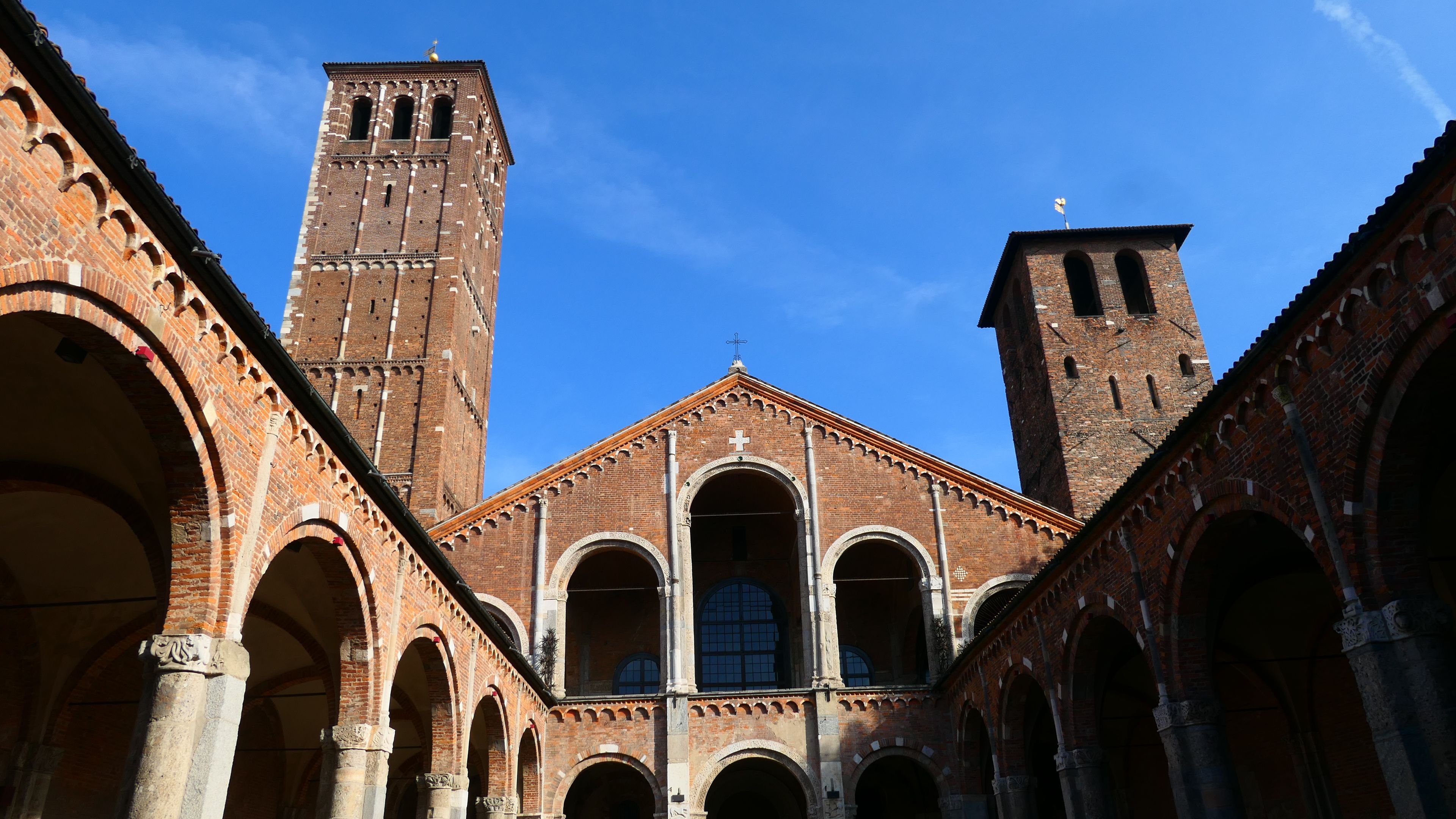
Basilica of Sant’Ambrogio
Find your green Milan
Milan may be known for business, architecture and fast-moving streets, but its parks and public spaces exist too.
Find somewhere to meet friends, read between classes or simply stop for a while. Discovering where you like to pause is as much a part of knowing Milan as discovering where you like to go.
Find your aperitivo
Navigli may be an obvious place to begin, but do not stop there. Aperitivo is part of social life across Milan.
Try different neighbourhoods. Go with classmates. Find somewhere that becomes your place.
Use your Italian
You do not need perfect Italian to start speaking it.
Order your coffee in Italian. Say buongiorno when you enter somewhere. Learn how to ask a simple question.
Università Cattolica also offers Italian language courses for international students who want to develop their language skills.
Every small interaction moves you from observing Milan to participating in it.
Leave Milan and come back
Milan’s transport connections make the city a useful base for exploring Lombardy, other parts of Italy and destinations elsewhere in Europe.
Go somewhere. Then notice what happens when you return.
At some point, arriving back in Milan may begin to feel less like the end of a trip and more like coming home.
Your Milan starts here
Your routine will shape your map.
The tram you take to class. The café where someone recognises your order. The park where you meet friends. Your favourite neighbourhood. The place you return to for aperitivo.
These small things are how a city stops being somewhere you arrived and becomes somewhere you live.
You do not need to understand Milan immediately.
Start with why the city moves the way it does. Learn how people live within that rhythm. Then discover what parts of Milan you want to make your own.
By the end of your semester or degree, Milan may still be fast and ambitious: the difference is that you will know how to move with it.
Article last updated 14/09/2026