

What makes a good doctor? Sheas Ahmed Shamsi on medicine, empathy and studying at Università Cattolica

by Alberto Valverde M.
|
Student Snapshot: Sheas Ahmed Shamsi at a Glance Home Country: Pakistan |
Sheas’ advice for students weighing a leap like his own is simple. "Do it.”
Every international student arrives with a story of how they got here. Sheas Ahmed Shamsi is studying Medicine and Surgery at Università Cattolica del Sacro Cuore in Rome, but his story begins in Karachi, Pakistan, a city he describes with affection and a sense of scale. “It’s like Napoli, but ten times bigger,” he laughs. He jokes that almost half of Italy could fit inside his hometown.
A decision made early
Growing up with two educators as parents, Sheas was surrounded by books, and a desire for something wider than what was immediately around him. He decided in ninth grade that he wanted to study medicine abroad.
"I wanted to evolve, both as a person and academically," he recalls. He was looking for a medical curriculum that felt current and an environment that would push him out of his comfort zone.
Why Italy, why Cattolica?
A random Google search is all it took for Sheas to find Università Cattolica del Sacro Cuore’s Medicine and Surgery programme. At the time, few people back home even knew that medicine could be studied in English in Italy.
But the choice of Italy itself was instinctive. "Italians and Pakistanis are not very different," he says. "We both love our families, we both love food, we both love a sense of community.”
A classroom without borders
What he didn't anticipate was how much his classmates would shape him. The Medicine and Surgery programme, taught entirely in English, brings together students from across the globe, and for Sheas, that proximity has done something no textbook could.
"You can read about tolerance, or you can actually sit next to someone and get to know them," he reflects. The more people you meet, the more you realise how much you share, regardless of where you come from. Connecting with others is often much easier than you might expect.”
A life built around care
Sheas's instinct to look after others didn't start in a lecture hall. As a boy in Pakistan, he rescued an injured turtle from a roadside, the first of many animals that would eventually fill the family home. That improvised menagerie became ForTheBetterLife, a shelter his sister now runs back home while he handles logistics from Rome.
Lessons from Cameroon
Last summer, Sheas spent a month volunteering at a hospital in the rural village of Ngoundal, Cameroon – a journey that included a twelve-hour drive across the country to reach it. There he encountered conditions including malaria and preeclampsia, while seeing firsthand how limited access to medicines and health information can affect patient care.
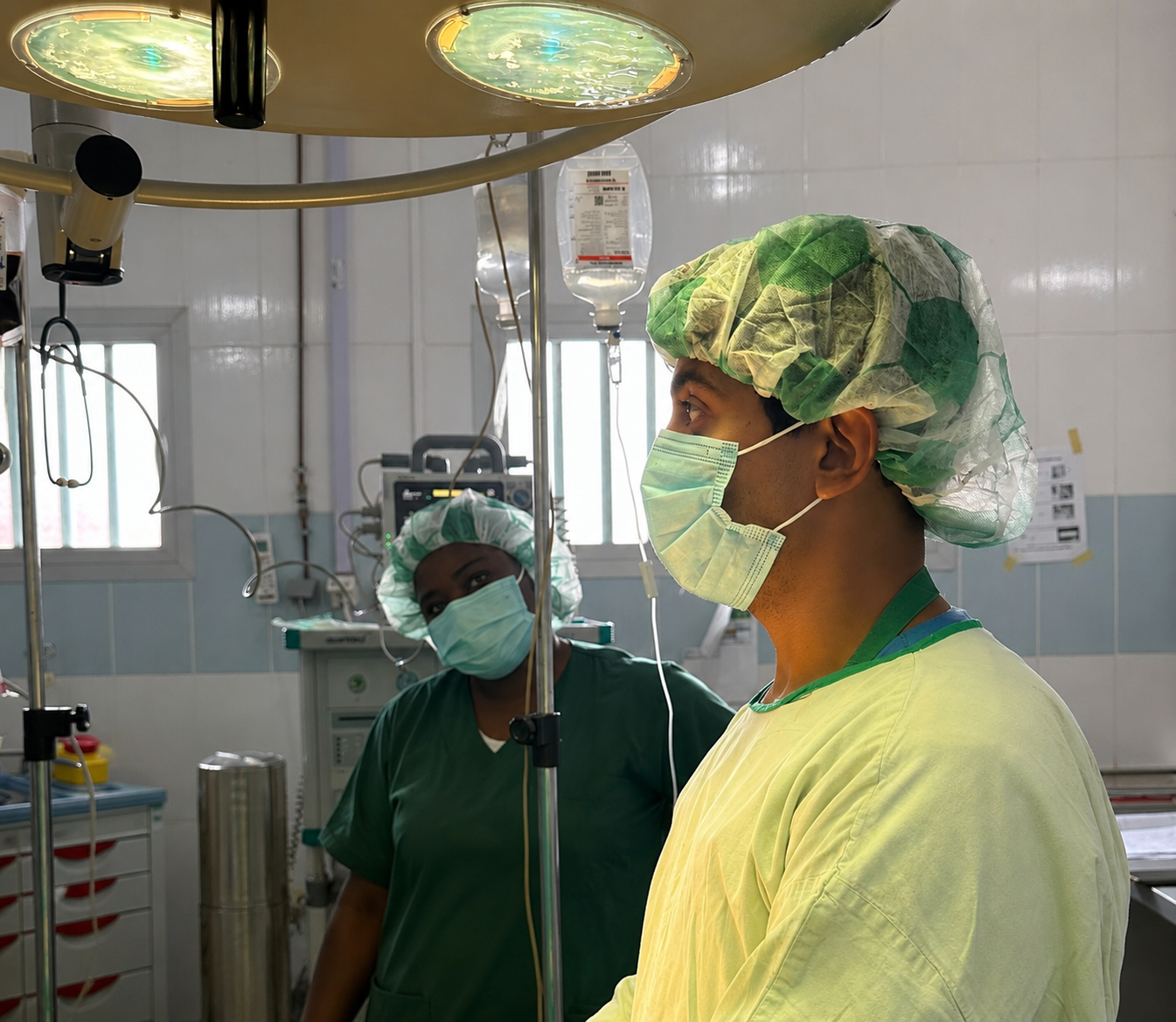
Sheas volunteering at a hospital in the rural village of Ngoundal, Cameroon
The experience reinforced his views on what medical training should prepare students for. "You are a doctor for the rich and the poor, for the village and the city," he says. "Just because you grew up in a city doesn't mean you shouldn't know how to care for an underserved community." For Sheas, the experience also changed the way he thinks about empathy in medicine: "The most important part of medicine is empathy – and empathy means understanding a situation you haven't lived yourself."
Looking ahead
Looking ahead, Sheas hopes to contribute to a model of healthcare in which access to treatment is less dependent on where a patient lives or what resources they have.

Sheas in Ngoundal, Cameroon
His advice for students weighing a leap like his own is simple. "Do it.” Medicine takes a little love and a little delusion. Without that, you can't survive six years. And in the end, what we regret most in life is not chasing the things we love."