

Designing the future of food: How Andjela Matković turned curiosity into innovation
by Maria Strumendo
|
Student Snapshot: Andjela Matković at a Glance Home Country: Serbia |
From Belgrade to Italy and into the global food sector, Andjela Matković’s journey shows how science, creativity and international education can reshape the way food is understood and developed. At Università Cattolica del Sacro Cuore, she began to see food through a broader lens, one that connects research, industry and consumer insight.
Innovation in practice
Sometimes innovation begins with something small: a sketch on paper, a product idea, or a concept still waiting to take shape.
For Andjela Matković, one of those ideas began as a sketch on paper. Seeing it later come to life as part of a food brand became a defining moment, a reminder that ideas can become tangible when study, creativity and real-world application come together.
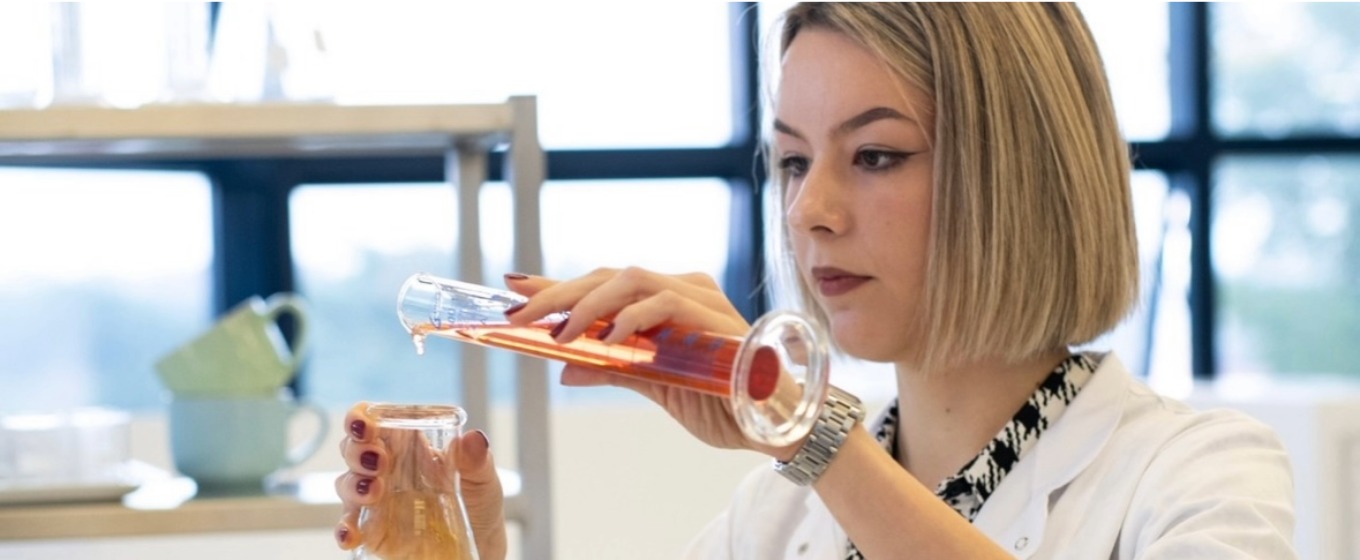
Today, she works in Belgrade at the intersection of research, product development and consumer insight in the food sector. As a Research and Development Engineer, she applies scientific knowledge to real-world challenges, contributing to projects that connect innovation with practical application.
Among them is Super Mini Eats™, a brand she helped shape through both strategy and design. Seeing one of her concepts move from idea to product marked an important turning point in her professional journey.
“When people with the same goal come together, combining knowledge, creativity and teamwork, something truly special can be created,” she reflects.
But the path that brought her there began much earlier, around a table in Belgrade, where food was never just about nutrition, but about care, connection and culture.
“In our culture, food is how we show love,” she says. “When you cook for someone, when you prepare a big meal, it means you care.”
That early understanding stayed with her. Yet as she moved deeper into her studies, she began to look at food from a different perspective, not only as culture, but as part of a broader system shaped by industry, communication and consumer trust.
“I didn’t just want to work in food,” she explains. “I wanted to understand it and change it.”
When food becomes more than nutrition
During her studies in food technology and engineering, Andjela became increasingly interested in the wider systems behind what reaches consumers, from production and formulation to communication and trust.
“Food is not only about chemistry or production,” she explains. “It’s about people, culture, behaviour and communication.”
This shift in perspective led her to look for an international experience that could bring scientific study closer to the realities of the food sector. She found it in the 2nd-level 1-year Specialising Master in Innovation in Food Science and Technology – Michele Ferrero at Università Cattolica del Sacro Cuore, Cremona campus.
“The word innovation really attracted me,” she recalls. “And Italy is a country where food culture, science and creativity come together.”
A pioneering cohort
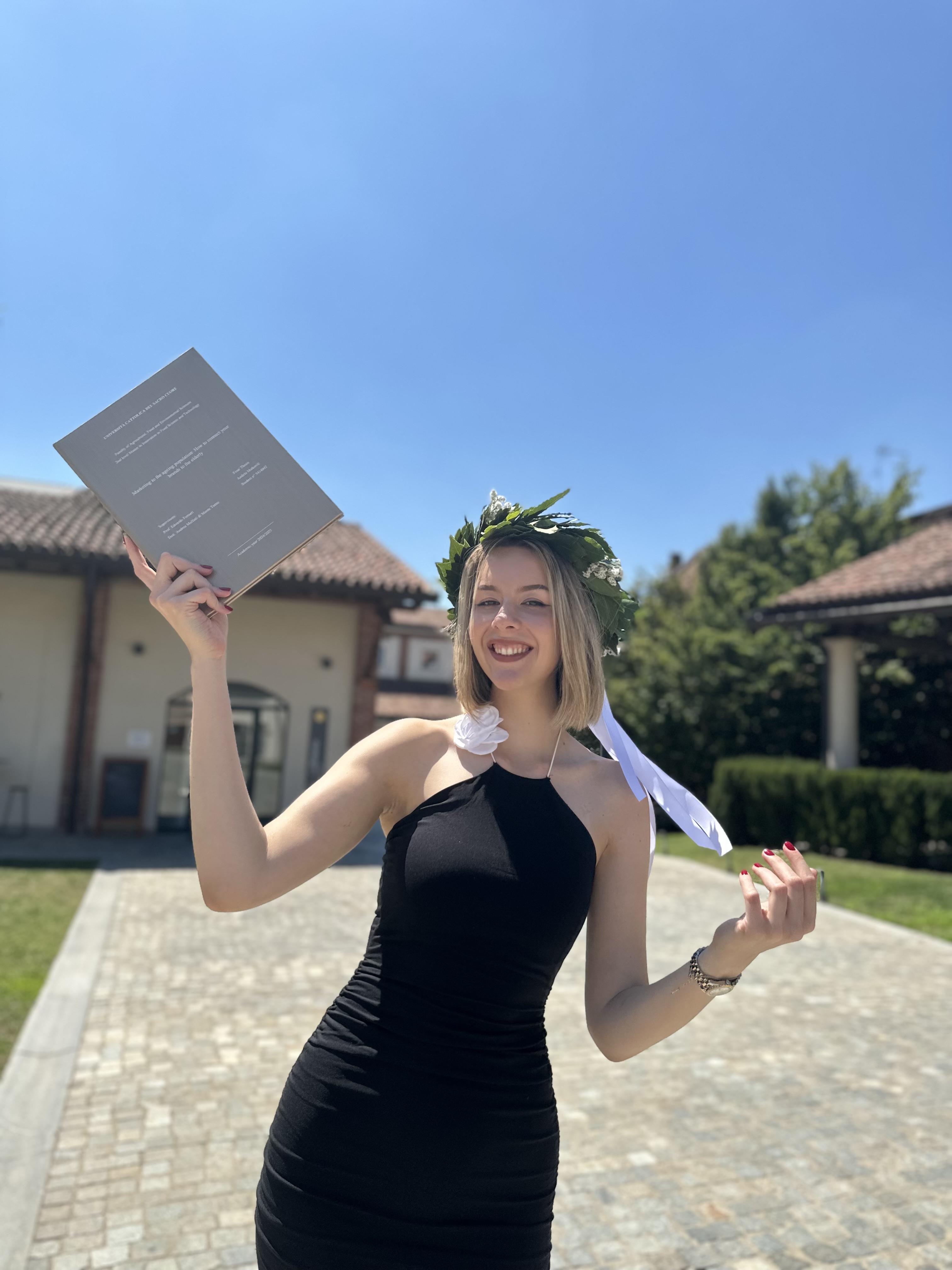
When Andjela arrived in Italy, she was not only beginning a new academic chapter, she was also part of the first cohort of students in the programme.
“There was no roadmap,” she says. “But that was also exciting. We were shaping the programme while living it.”
Moving from the dynamic pace of Belgrade to the smaller city of Cremona required adjustment. At first, the slower rhythm and language barriers felt unfamiliar. Over time, however, the close-knit academic environment and the support of professors and classmates helped transform the experience.
From classroom to industry
One of the experiences that left the strongest impression on her was seeing food innovation up close in a professional environment. For Andjela, that meant stepping into laboratories where products like Nutella are created, and seeing up close how food innovation takes shape beyond the classroom.
During the business case project, Andjela developed a product from start to finish. Her concept, a “better-for-you” praline she named Malina, brought together everything she had been learning.
At the same time, she worked across different laboratories, including those dedicated to chocolate and spreads.
“I remember being in the Nutella lab and thinking, ‘this is real,’” she says.
It also reinforced something she had begun to understand more clearly: innovation is not only about creating something new, but about making it meaningful and workable in the real world.
During this period, Andjela also completed her internship in Alba, Italy, gaining first-hand insight into the operations of a major food company and reinforcing the importance of translating research and ideas into practical solutions.
Bringing the experience back home
During the Master, she had worked on hands-on projects that connected academic learning with real product development. When she returned home, she wanted to recreate that same dynamic.
Together with her current team at Vivatra, she introduced a small programme in collaboration with the Faculty of Agriculture at the University of Belgrade. Students were invited to develop food concepts and present them directly to the company, working under real constraints, and two of the student- developed products went on to reach the market.
Continuing to learn
Alongside her work, Andjela has continued her studies in Belgrade, enrolling in a master’s programme in marketing and business.
“If you want to make change, you need more than one perspective,” she explains. “Science is one part. But you also need to understand people.”
A vision for responsible food innovation
Her ambition is to contribute to innovation that connects scientific research with real human needs, designing food products that respond to both technological possibilities and evolving consumer expectations.
“This experience taught me something very important,” she says. “Nothing is impossible. It might be difficult, but if you really want something and work for it, you can make it happen.”
From Belgrade to Cremona and into the global food sector, Andjela Matković’s story illustrates how curiosity, international education and interdisciplinary thinking can shape the next generation of professionals working to rethink the future of food.