

From equations to the soil: Studying food systems between India and Italy
.jpg)
by Nicole Brini
7 min read
|
Student Snapshot: Vardesh Paliwal at a Glance |
Vardesh Paliwal shifted from Mathematics to Food Production Management at Università Cattolica del Sacro Cuore in Piacenza, in Italy’s Food Valley. Grounded in experience with farmers in India and informed by European approaches to food systems and regulation, his path reflects the links between agriculture, sustainability, and education across borders.
When Vardesh Paliwal was studying Mathematics at Ashoka University in India, everything suggested he was on a respected academic path. He performed well in assignments and worked hard to meet the rigour of the programme, surrounded by peers whose dedication and talent he deeply respected. Yet as he increased his effort, he realised that the question was not whether he could continue, but whether this was the direction he wanted to pursue. Something essential still felt missing.
Sitting in his professor’s office one afternoon, surrounded by equations and proofs, Vardesh realised that numbers alone no longer gave him direction. Mathematics, once a strong interest, had begun to feel distant from the questions he wanted to engage with at that stage of his life. What troubled him most was not difficulty, but orientation.
Today, that search for direction has taken him far from the blackboard and into the fields of Italy’s Food Valley. Now 25, Vardesh is a first-year student in the Bachelor’s programme in Food Production Management at Università Cattolica del Sacro Cuore, Piacenza campus. His move from abstract reasoning to the practical realities of food systems reflects a broader question faced by many students today: how to align intellectual ambition with work that carries responsibility that extended into everyday systems.
The question that reoriented everything
The turning point came through a simple question: “Why aren’t you doing something in agriculture, like your father?”
Vardesh grew up in Indore, in central India, in a family closely connected to agriculture as daily work rather than theory. His family business operates in agricultural inputs and biostimulants and supports a wide network of farmers across the region.
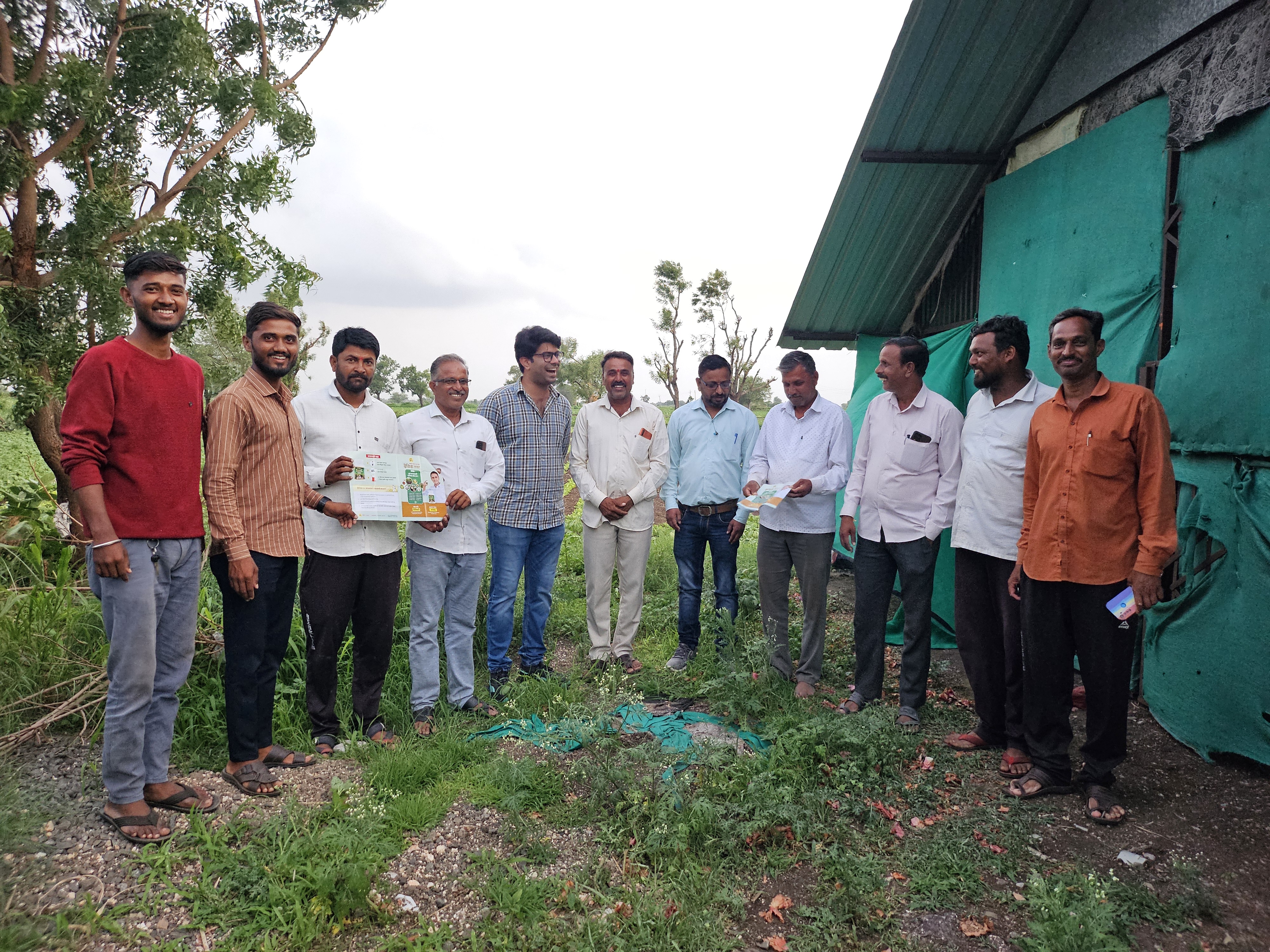
After leaving his math studies, he returned home and spent a year working directly with farmers, often meeting twenty or more each day. What he encountered was a complex and fragile sector shaped by uncertainty, price fluctuations, and decisions made under constant pressure.
“Agriculture is often treated as a secondary activity by society,” he says. “Food is essential, yet those who produce it are often spoken about but rarely listened to.” He adds that in many contexts, people engaged in agriculture are seen as outside urban culture, even though their work sustains it.
Food as a system, not a shelf item
During this period, Vardesh began to see food not as a finished product on a supermarket shelf, but as a biological, economic, and ethical process that begins long before consumption.
He observed how farmers reserve part of their production to remain chemical-free for personal consumption and became aware of how differently “organic” is defined across countries. Labels, he realised, can simplify realities that are anything but simple.
These differences highlighted the need for shared standards and informed governance within global food systems.
At the same time, India was undergoing significant agricultural reforms, particularly in the regulation of biostimulants. As Vardesh studied the new national guidelines, he noticed clear parallels with European Union regulations. This alignment pointed him toward Europe, and Italy in particular, as a place where food science, regulation, and tradition operate side by side without losing contact with production realities.
Why Piacenza, why the Food Valley?
Vardesh deliberately chose the Piacenza campus of Università Cattolica for both its academic focus and its setting. It is a place where food is studied as a system and lived as a culture.
Located at the centre of Italy’s Food Valley, Piacenza offers direct exposure to food production, processing, and sustainability. It remains connected to major economic hubs while retaining a pace that allows relationships to form through routine and proximity.
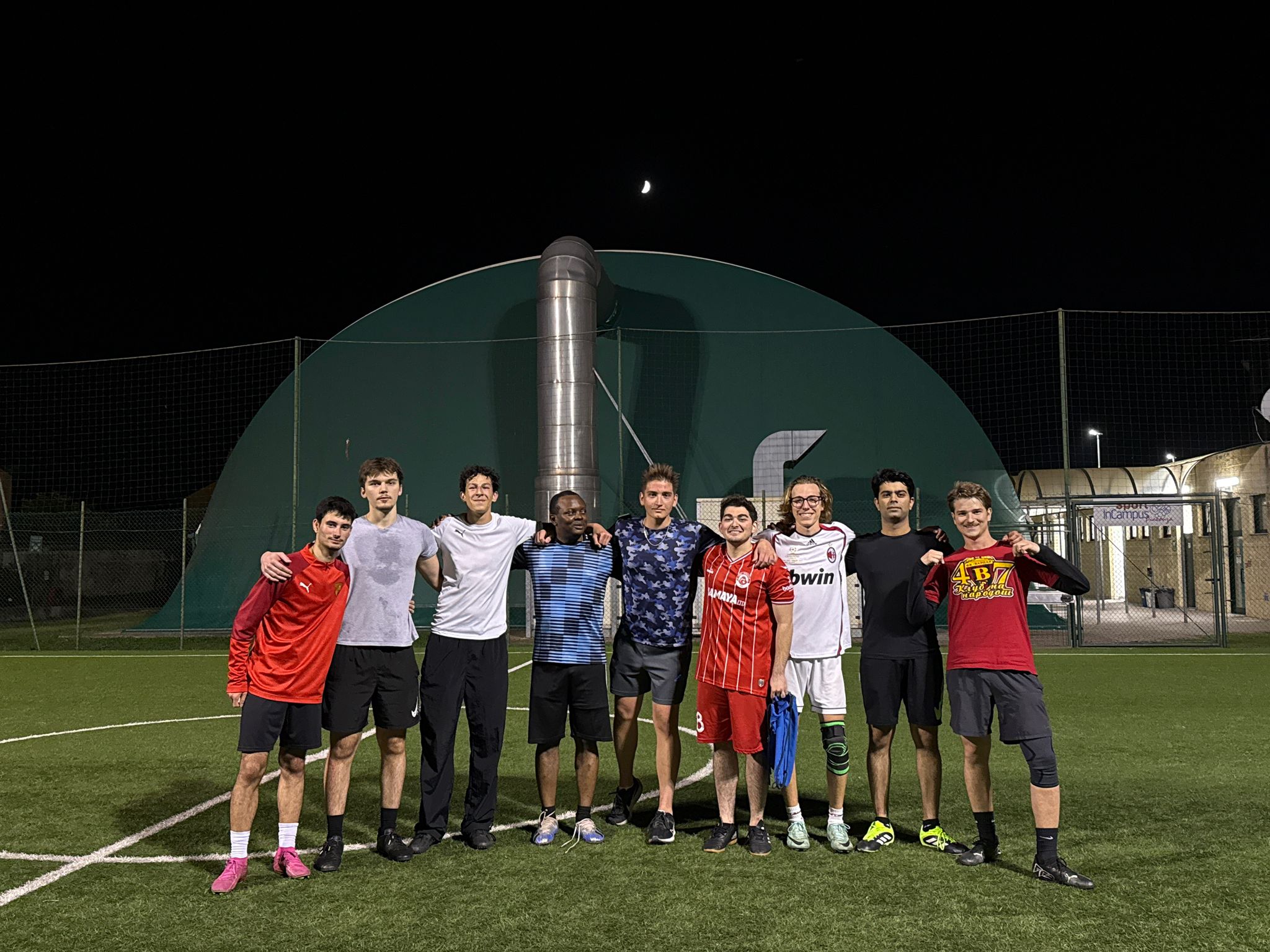
After a few months in Piacenza, Vardesh felt settled. He joined the local chess club, played football, and began representing the University in chess tournaments. Integration, in his view, is built through regular presence, not speed.
One moment in particular confirmed his choice. During his first theology seminar, the professor opened with a simple statement that stayed with him: “We are here for the farmers.” The professor often reminded that students, scientists and academics do not hold authority over farmers. They learn from them and then formalise that knowledge. For Vardesh, this captured an approach to education that connects academic study with responsibility toward society.
Studying food: science, economics, responsibility
In the classroom, Vardesh values the rigour with which foundational subjects such as chemistry, food economics, and production systems are taught. This is especially important for international students, who must build a shared technical language from the outset. He sees the emphasis on fundamentals as a form of respect. Understanding food requires understanding what lies beneath it, starting with soil, inputs, and decisions made upstream.
Alongside his coursework, he reflects on food in practical and ethical terms. He describes it as a transfer of energy that begins in the soil and ends at the table, linking farmers, processors, and consumers within the same system.
Looking ahead: building value in food production
Vardesh’s long-term plans take him back to India, but with new tools and a clearer framework for quality, safety, and traceability. He hopes to expand his family business into the secondary sector of food production, focusing on processing and value creation while strengthening farmers’ positions within the supply chain.
The road, ten years from now
Asked what message he would leave for his future self, Vardesh pauses before answering. “I hope you were right about the road you took,” he says, with a smile.
From Mathematics to Food Production, and from Indore to Piacenza, his choices reflect a way of thinking shaped as much by experience as by time spent observing how food systems work.