

When the vineyard becomes the classroom: Riccardo Castellana's Cattolica experience
by Alberto Valverde M.
|
Student Snapshot: Riccardo Castellana at a Glance |
Riccardo’s parents did not pack light when visiting him halfway through his semester abroad in Australia. Carefully tucked between their clothes were two bottles of Malvasia di Candia Aromatica, sourced straight from the hills of Piacenza. Bottles which Riccardo uncorked over a typical Italian dinner with his new-found friends, students and researchers he had met at the University of Adelaide. When he opened the bottles, the reaction was immediate. "Their minds were blown," he recalls. "It felt really good to have people appreciate so much my hometown."
Roots in Piacenza
Riccardo grew up in Vigolo Marchese, a small village in the foothills outside Piacenza, in a house that was originally built on a farm. He never went precisely looking for agriculture, it was simply the backdrop of his childhood. Vineyards, countryside, the rhythms of the land. "Maybe I wasn't interested in it when I was a teenager," he admits, "but when I started looking into my studies, it became more and more clear that it was a passion." When the time came to choose a degree, the answer had been outside his window his whole life.
Finding his path at Cattolica
At Università Cattolica, he pursued a two-year Master of Science in Sustainable Viticulture and Enology. The programme gave him the opportunity to explore viticulture and enology in depth, combining scientific study with the practical realities of wine production. What had begun as an interest in wine was becoming something more concrete: a direction for his future.
His thesis took that interest further with a preliminary study on the effect of ageing wine in juniper wood versus traditional oak, analysing how different wood species influence the release of polyphenols and other compounds into the wine. It was precise, research-driven work, rooted in the craft of actually making something.
Piacenza as a classroom
Studying wine in Piacenza is not just an academic exercise, the territory insists on being part of the curriculum. Alongside his studies, Riccardo worked seasonal harvests at local wineries including Baraccone, Pusterla, and Saccomani, learning to plan his exam sessions before the August–October harvest window.
In a master's cohort where he was the only student from Piacenza, and one of only two Italians, he quietly became the area's unofficial ambassador. "We kind of took it upon ourselves to show the area to our students," he recalls. For the international classmates around him, Riccardo was the person who knew which wineries were worth visiting, which wines to try, which corners of the province most people never find. It was, in its own way, an education running in both directions.
A new perspective in Adelaide
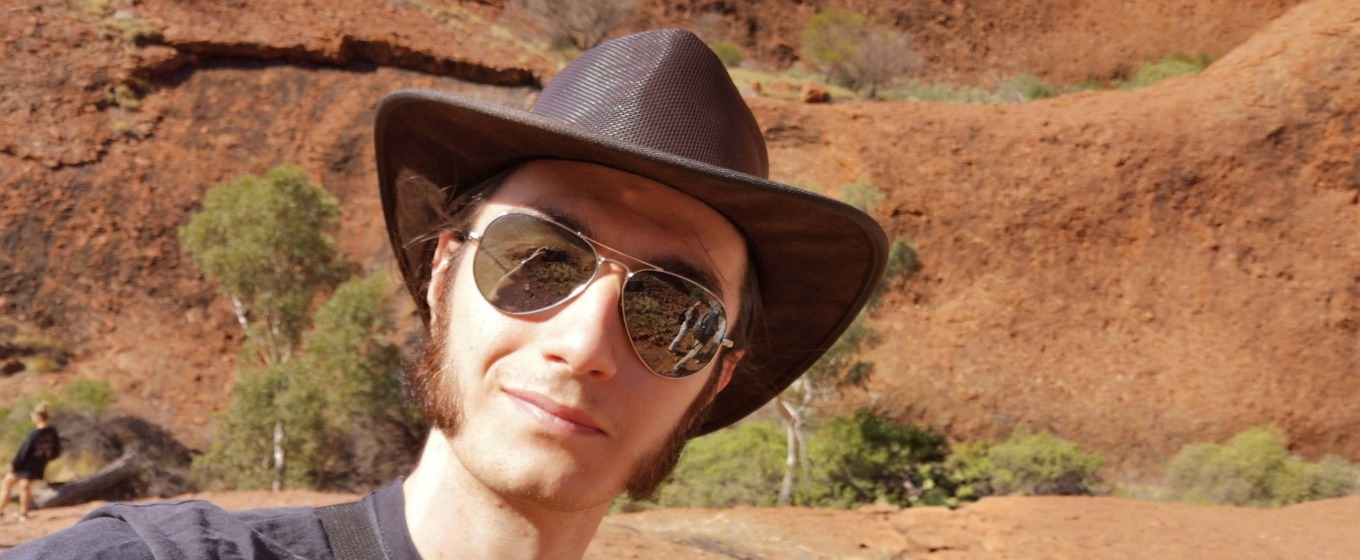
During his master’s, Riccardo also had the opportunity to study abroad. He chose Australia, where he attended Adelaide University. Already fluent in English, he was drawn by the opportunity to experience a new continent while continuing to develop his knowledge of viticulture and enology in an international setting.
The culture shocks were real. The water tasted unfamiliar. A good pizza was hard to find and expensive when you did. Dinner, inexplicably, happened at five in the evening. "I was always the one that went to dinner at the latest," he laughs. "I was going there at eight, and I was by myself in the kitchen."
But the academic contrast ran deeper than mealtimes. Australian winemaking, he found, is precise, consistent, and highly technical, built on a relatively small number of grape varieties, mostly French, studied and replicated across a young industry. Italian wine, by comparison, is wilder, more varied, and occasionally more flawed. "The approach in Australia is much more scientific," he says. "Sometimes you enjoy that – it's always solid – but it might lack a little bit in the poetry of making wine."
It was in that gap – between Australian precision and Italian poetry – that Riccardo understood something about where he came from. Which brings us back to that dinner. His parents had flown in with Malvasia tucked in their suitcase. He cooked, he poured, and he watched his Australian friends encounter a wine they had never heard of and would struggle to find outside of northern Italy. That moment right there reminded him of the beauty behind his craft, the moment all the complex production behind a bottle turns into a shared moment.
Back to the cellar
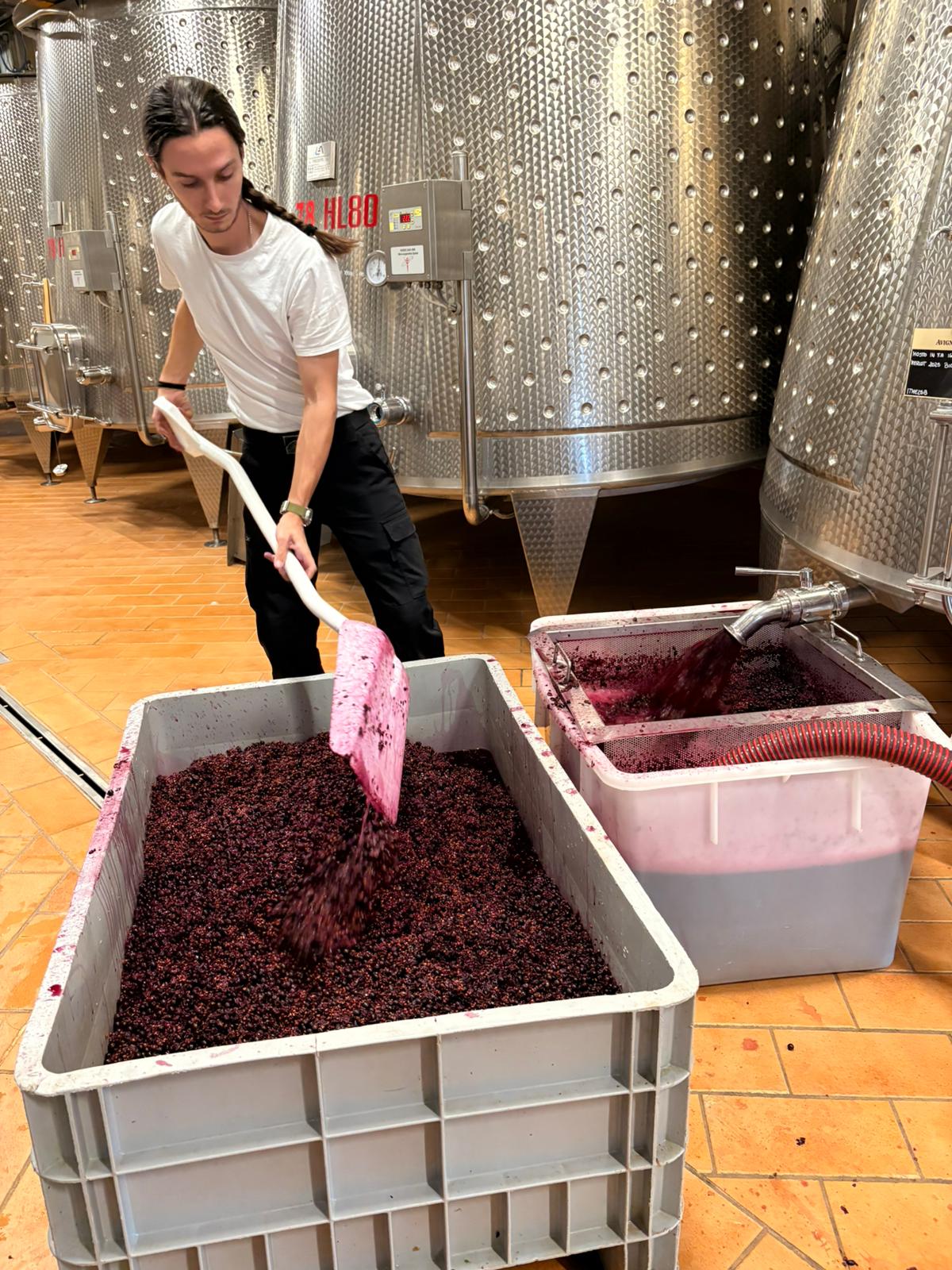
Back in Piacenza, Riccardo is now working as assistant enologist at a local winery: analysing, tasting, blending, and making the daily decisions that turn grapes into wine. It is exactly where he intended to end up. The degree gave him the theory, the harvests gave him the rhythm, and Adelaide gave him the perspective. But the job, he is quick to point out, demanded something none of those could fully provide. "You can learn the theory of winemaking," he says, "but when you actually do it – when you have your hands full and your boots full of grapes – it's completely different."
For anyone considering the programme, his advice is characteristically grounded: don't be put off by the size of the city. Piacenza, he insists, is more than enough. And for a boy who grew up on a former farm in the hills just outside it, who carried its wines to the other side of the world and watched strangers fall in love with them, it always was.