

Wine and place: learning, practice and building a community
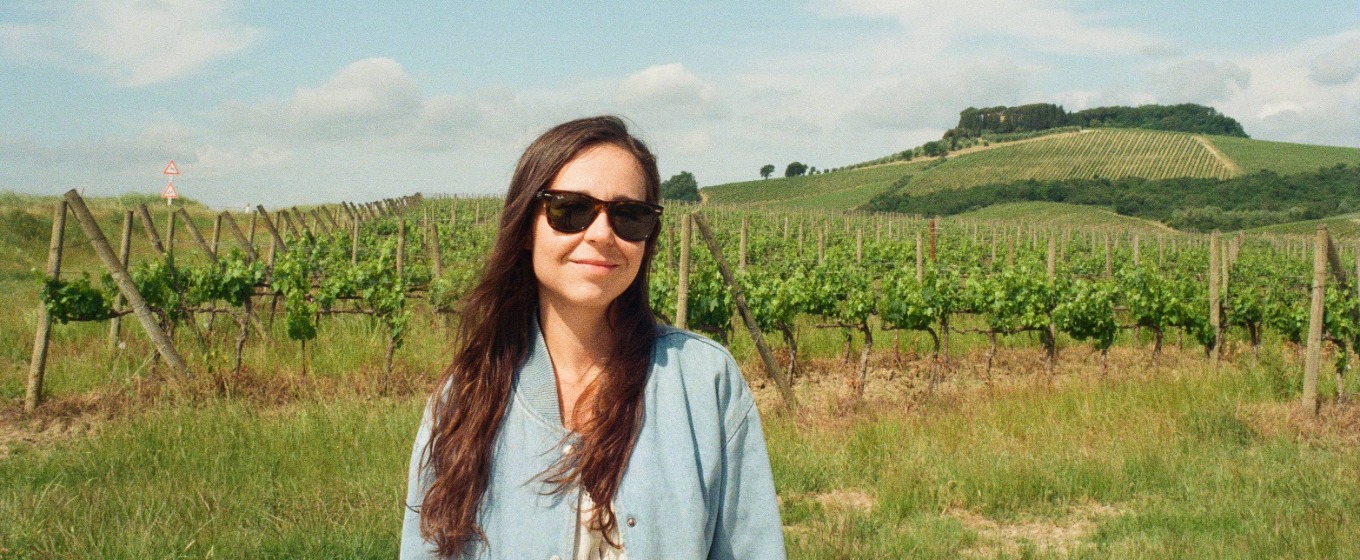
by Maria Strumendo
|
Student Snapshot: Alexandra McDonnell at a Glance Home Country: United States |
For alumna Alexandra McDonnell, studying wine in Piacenza was never only about viticulture or tasting. It was about discovering how wine can carry culture, memory and community, and how those ideas can be translated into a new space far from Italy.
Alexandra McDonnell came to understand that wine is never only about what is in the glass. It is also about place, memory, ritual and the way people gather.
That understanding did not begin in a tasting room or a business plan. It took shape gradually, through travel, study and immersion in Italy, where wine revealed itself not simply as a product, but as a social language. Today, that idea lives on in Miami, where Alexandra has created a space shaped by what she learned abroad: one where wine becomes a way of connecting people rather than simply serving them.
She is the co-founder of Vinoteca Miami, a wine shop and bar in Coconut Grove that she runs with her mother. But the roots of the project stretch back to Piacenza, where Alexandra studied Sustainable Viticulture and Enology at Università Cattolica del Sacro Cuore, after earlier academic experiences in international studies, business and languages. Rather than following a linear career plan, her path has been shaped by the growing desire to work in a field that felt both international and deeply human.
Before arriving in Piacenza, Alexandra had already spent time in Italy, including a study abroad experience in Rome. Yet what she wanted next was something different: not another international experience built around familiar comforts, but something more rooted in everyday Italian life.
“I wanted a more authentic approach,” she says. “I loved Rome, but I was living with Americans in an American university, which was great, but I wanted to really dive into the culture.”
Piacenza offered precisely that. Smaller, quieter and more locally grounded than Rome, it gave her a more immersive relationship with language, food and wine. Daily life unfolded at a different rhythm. Italian was no longer something studied, but something lived. Bars, aperitivi and regional traditions were not occasional cultural references, but part of the structure of everyday life.
That environment also changed the way she thought about wine itself.
At Università Cattolica, Alexandra encountered wine not only through theory, but through direct contact with vineyards, producers and production practices. She learned from specialists working across different areas of the sector and developed a more technical understanding of viticulture and winemaking. At the same time, visits to wineries and hands-on activities in the University’s experimental vineyard made the subject feel tangible and immediate.
But what stayed with her most was not only the technical knowledge. It was the people behind the wine.
During visits to smaller wineries in and around Piacenza, she began to see wine less as a commercial product and more as a continuation of family histories, local identities and forms of care. One memory in particular remained with her: visiting a winery on a Saturday while the family who owned it were celebrating a child’s birthday, and still taking the time to welcome students in and show them around.
“There’s a lot of love that goes into it,” she says. “They’re real people making these wines.”
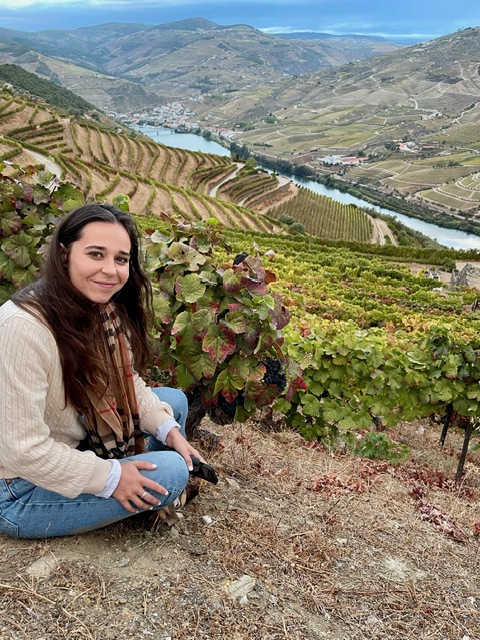
That shift in perspective became central to the way she would later think about wine professionally. What interested her was not only what was being produced, but how stories, traditions and relationships travel alongside it.
Her internship in Veneto added another layer to that understanding. Rather than working solely in production, she chose to complete her placement in marketing, a decision shaped in part by the fact that Florida is not a winemaking region and that she already sensed her future would lie in bringing wine to consumers rather than producing it herself. The experience helped her understand how wines are positioned, communicated and translated across markets, and how technical knowledge can support that process.
That combination of cultural awareness, business insight and wine education would later prove decisive.
By the time she returned to Miami after graduating in late 2022, Alexandra knew she wanted to work in wine, but not in a conventional corporate setting. The question was how. The answer, it turned out, had been forming quietly during her time in Italy.
Like many students living in Piacenza, she had spent time in local enoteche and wine bars, places that became part of the social fabric of daily life. What struck her was not only the wine itself, but the atmosphere these spaces created: informal, familiar and welcoming, places where people returned often enough to be recognised and where a sense of belonging developed naturally.
That was the concept she wanted to bring home.
Not a replica of Italy, and not a themed version of it, but something less literal and more difficult to define: a feeling.
“It was more about that warmth, that feeling of home, of feeling welcomed, feeling like you’re in a comfortable place,” she says. “More of what I found in Italy.”
The idea became concrete when her mother visited her in Piacenza. What had once seemed like a distant possibility suddenly felt possible. Within less than a year of Alexandra’s graduation, Vinoteca Miami opened its doors in August 2023.
Today, the space reflects both sides of what she brought back from Italy. On one level, it draws on the technical and cultural knowledge she developed during her studies, allowing her to introduce customers to unfamiliar wines, explain regional differences and share the stories behind what they are drinking. On another, it reflects something more personal: a desire to create a place where people feel at ease, where wine is approached with curiosity rather than intimidation, and where community can form over time.
That atmosphere has become one of the most meaningful parts of the project. Some customers return often enough to become friends. Others have told her that the space reminds them of Europe. One visitor from Milan told her he felt as though he were back home in Italy and did not want to leave. For Alexandra, that reaction confirmed that what she had hoped to bring back was not only aesthetic, but emotional and social as well.
Even the walls of the shop carry traces of that journey. Alexandra, who loves photography, has filled part of the space with images taken during her time in Italy, creating a visual archive of places, people and moments that continue to shape the atmosphere she wanted to build.
Looking ahead, she still imagines one day returning to Italy, perhaps even to work a harvest again or, further down the line, to have a small vineyard of her own. For now, however, her work already reflects something enduring from her time abroad: the belief that wine is not only something to consume, but something that can carry culture, memory and belonging across borders.
At Università Cattolica, that idea became more than an intuition. It became a way of seeing.