

Tatev Avetisyan: How Storytelling, Identity, and Milan Came Together in One Creative Path
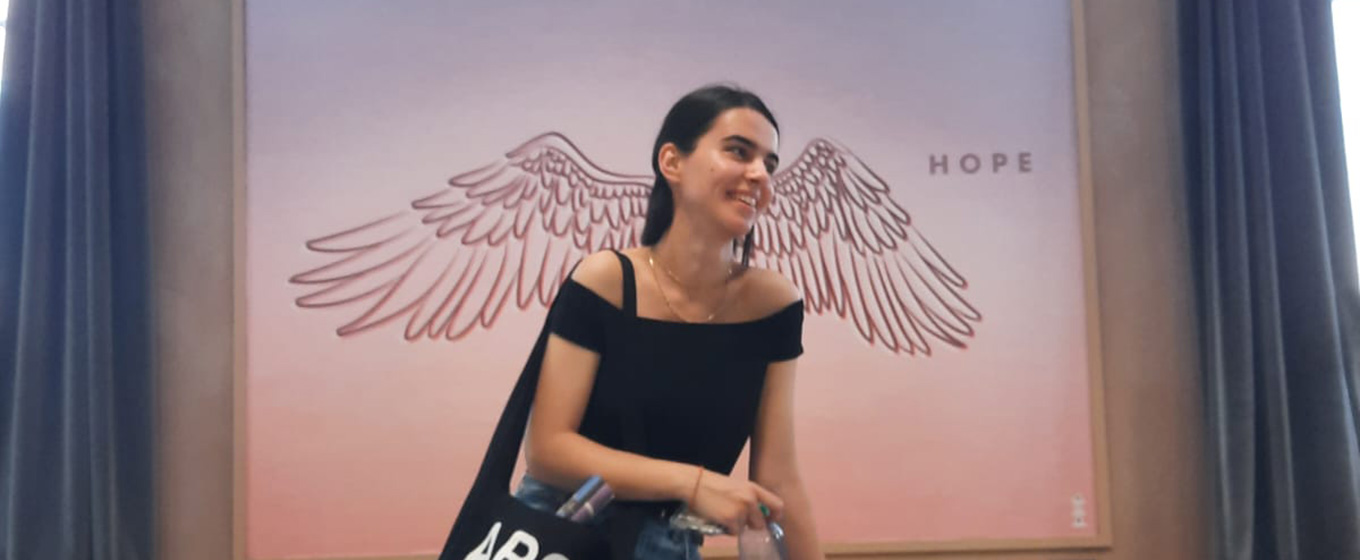
by Mateo Medina Abad
|
Student Snapshot: Tatev Avetisyan at a Glance Home Country: Armenia |
From Yerevan (Armenia) to Milan, an international alumna’s creative path through Università Cattolica’s Master of Science in the Art and Industry of Narration
Some stories are built from words. Others are built from stone.
For Tatev Avetisyan, alumna of the 2-Year Master of Science in the Art and Industry of Narration at Università Cattolica del Sacro Cuore, storytelling is a form of architecture, one shaped by memory, emotion, and place. From Armenia to Italy, from fashion communication to screenwriting, Tatev has crafted a narrative voice rooted in identity and human connection.
“Armenia shaped how I see the world,” she says. “There, architecture isn’t just a form, it holds history, culture, and emotion. That taught me that storytelling is never just one thing; it’s interdisciplinary, and everything is deeply connected.”
A story forged in stone and history
In her hometown Yerevan, stone is more than material. It’s memory. It’s identity. And it’s the foundation of how Tatev learned to see the world.
“I think Armenians are tough people,” she reflects. “Like our volcanic stone, we’re forged by what we’ve endured – and shaped by what we’ve carried through time.”
That belief became the lens for her writing, whether in branded content for ArchDaily or creative scripts, always grounded in emotion, authenticity, and empathy.
Why Tatev chose Università Cattolica and Milan for her Master’s
After earning degrees in English and Communication in Armenia and Fashion Communication in Milan, Tatev discovered that stories don’t just exist on the page: they live in spaces, clothing, and even city rhythms.
That realisation led her to the Master of Science in Art and Industry of Narration at Università Cattolica, where her storytelling style evolved from conceptual to cinematic.“At Università Cattolica, we weren’t just analysing stories, we were creating them,” she says. “We moved from audience to creator. From theory to script. The professors showed us how a story works behind the scenes. How writing, costume, and direction all intersect.”
Milan, too, was part of the education. She describes the city’s pace as something that shaped her worldview: “Everything in Milan has its own rhythm. It taught me to see beauty in even the greyest moments.”
From concept to screen: building a career in narrative art
During her time at Università Cattolica, Tatev’s thesis explored fashion, identity, and memory through film, a visual narrative that mirrored the way she sees storytelling: layered, personal, and expressive.
Now working as a Branded Content Manager at ArchDaily in Munich, Germany, after completing her studies in Milan, she continues to tell stories that resonate, not just inform. Her writing brings architecture and identity together, building bridges between disciplines, cultures, and readers.
What makes Cattolica special for aspiring storytellers
Tatev credits her time at Università Cattolica del Sacro Cuore (and the synergy between classroom and city life) as transformative.
“I remember reading They Shoot Horses, Don’t They? in class and then watching it on screen that night. It was in those moments that everything clicked. I realised that storytelling isn’t just about writing; it’s about how people experience your work.”
“Cattolica gave me more than technical skills: it gave me insight into the ecosystem of art. It taught me how stories live in the world, and how to create with meaning.”
Storytelling as emotional architecture
For Tatev, storytelling is never about ego, it’s about empathy. Whether she’s writing about architecture, fashion, or technology, she always returns to one principle:
“The story isn’t about me. It’s about the reader. It’s about moving people, making them feel something. That’s what stories are for: not to be admired, but to be shared.”
Her childhood notebooks kept safely in Yerevan are filled with favourite sentences she copied and recopied by hand. Even now, she considers that habit part of her voice.
“I didn’t bring those notebooks to Milan. I think they belong in Armenia. They’re part of the foundation.”
Tatev’s journey is a reminder that storytelling is both art and architecture – a bridge between where we come from and where we’re going. Through Università Cattolica, she discovered how creativity can take form across disciplines, cultures, and cities. Her path from Yerevan to Milan shows that when identity and imagination meet, stories don’t just describe the world – they build it.